An introduction to wind resource assesment using CFD with examples : Steps towards using LES at the Exascale
Date: April 20th, 2020, 11.00 – 12.15 AM, Monday,
speaker: Herbert Owen, senior researcher at Barcelona Supercomputing Center
Registration url: https://register.gotowebinar.com/register/2626336760210404108
abstract: Wind resource assessment is performed before deciding to construct a new wind farm.
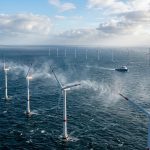
Its objective is to obtain a better understanding of the flow over the potential site for a wind farm.
It combines experimental data from a couple of wind mast that are the energy the wind farm can produce and enables to determine the optimal positions for the wind turbines.
Currently, state of the art in the industry is to resort to Reynolds Averaged Navier Stokes (RANS) turbulence models for such simulations.
While RANS models are computationally affordable and quite robust, they are known to have accuracy limitations for regions where separated flows are found, behind mountains for instance.
Large Eddy Simulation (LES) can provide much more accurate results, at a much higher computational cost.
With the advent of exascale computers, LES has become a viable alternative.
In this talk, we will present the work we have been doing for Iberdrola during the last six years and the steps we are taking within EoCoE to push the limits towards much higher accuracies thanks to the efficient use of exascale resources.
ppppp
EoCoE is a European Horizon 2020 funded project of Centre of Excellence in computing applications. It is designed to enhance numerical simulation efficiency in the international context of the High Performance Computing (HPC) challenges. It focusses its application scope towards low carbon energy domains.
To measure solar energy's profound impact, we must contemplate the “carbon footprint” — a metric that quantifies the total greenhouse gas emissions caused by an individual, organization, event, or product. Traditional electricity production contributes heavily to a nation's footprint, with fossil fuels being the predominant energy source. By harnessing solar energy, we offset these emissions and aid in the progressive decline of our collective carbon footprint.
Switching to solar is more than energy change it's a commitment to a future with reduced carbon emissions
- Roberto Liam
Our Role in Solar Advancement
To measure solar energy's profound impact, we must contemplate the “carbon footprint” — a metric that quantifies the total greenhouse gas emissions caused by an individual, organization, event, or product. Traditional electricity production contributes heavily to a nation's footprint, with fossil fuels being the predominant energy source. By harnessing solar energy, we offset these emissions and aid in the progressive decline of our collective carbon footprint.
In the battle against climate change, the shift towards renewable energy sources plays a pivotal role. Among these, solar energy emerges as a beacon of hope and innovation. Positioned as both a clean and inexhaustible source of power, solar energy has shown significant promise in reducing global carbon emissions. Let’s explore how the adoption of solar power is making strides in the journey towards a more sustainable future.
Active participation from both consumers and industries in the solar movement is imperative. It includes transitioning to solar power where feasible, supporting policies that encourage