

Modeling supercapacitors at the molecular scale
Date: 07/07/2021 10.00-11.15 am, Wednesday
speaker: Dr. Ulrich Ruede (FAU Erlangen-Nürnberg and CERFACS Toulouse)
Registration url: https://attendee.gotowebinar.com/register/1781680943031417872
abstract: The electric double layer is generally viewed as simply the boundary that interpolates between an electrolyte solution and a metal surface.
Contrary to that view, recent studies have shown that the interface between ionic liquids and metallic electrodes can exhibit structures and fluctuations that are not simple reflections of surrounding bulk materials.
The charge of the electrode is screened by the interfacial fluid and induces subtle changes in its structure, which cannot be captured by the conventional Gouy-Chapman theory.
In recent years, this topic has been more intensively addressed in order to develop supercapacitors that are more efficient. The latter are electrochemical devices that store the charge at the electrode/electrolyte interface through reversible ion adsorption.
In order to understand the molecular mechanisms at play, we have performed molecular dynamics simulations on a variety of systems made of ionic liquids and electrodes of different geometries ranging from planar to nanoporous.
A key aspect of our simulations is to use a realistic model for the electrodes, by allowing the local charges on the atoms to vary dynamically in response to the electrical potential caused by the ions and molecules in the electrolyte.
These simulations have allowed us to gain strong insight on the structure and dynamics of ionic liquids at electrified interfaces.
From the comparison between graphite and nanoporous carbide-derived carbon (CDC) electrodes, we have elucidated the microscopic mechanism at the origin of the increase of the capacitance enhancement in nanoporous carbons.
We have also extended the simulations to blue energy production devices, which use the capacitive effect to extract electricity from salinity gradients between sea water and rivers.
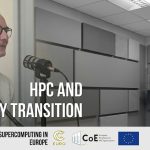
EoCoE is a European Horizon 2020 funded project of Centre of Excellence in computing applications. It is designed to enhance numerical simulation efficiency in the international context of the High Performance Computing (HPC) challenges. It focusses its application scope towards low carbon energy domains.
To measure solar energy's profound impact, we must contemplate the “carbon footprint” — a metric that quantifies the total greenhouse gas emissions caused by an individual, organization, event, or product. Traditional electricity production contributes heavily to a nation's footprint, with fossil fuels being the predominant energy source. By harnessing solar energy, we offset these emissions and aid in the progressive decline of our collective carbon footprint.
Switching to solar is more than energy change it's a commitment to a future with reduced carbon emissions
- Roberto Liam
Our Role in Solar Advancement
To measure solar energy's profound impact, we must contemplate the “carbon footprint” — a metric that quantifies the total greenhouse gas emissions caused by an individual, organization, event, or product. Traditional electricity production contributes heavily to a nation's footprint, with fossil fuels being the predominant energy source. By harnessing solar energy, we offset these emissions and aid in the progressive decline of our collective carbon footprint.

In the battle against climate change, the shift towards renewable energy sources plays a pivotal role. Among these, solar energy emerges as a beacon of hope and innovation. Positioned as both a clean and inexhaustible source of power, solar energy has shown significant promise in reducing global carbon emissions. Let’s explore how the adoption of solar power is making strides in the journey towards a more sustainable future.
Active participation from both consumers and industries in the solar movement is imperative. It includes transitioning to solar power where feasible, supporting policies that encourage