

SHEMAT-Suite: An open-source code for simulating flow, heat and species transport in porous media

Abstract


SHEMAT-Suite is a finite-difference open-source code for simulating coupled flow, heat and species transport in porous media. The code,written in Fortran-95, originates from geoscientific research in the fields of geothermics and hydrogeology.

It comprises:

(1) a versatile handling of input and output,
(2) a modular framework for subsurface parameter modeling,
(3) a multi-level OpenMP parallelization,
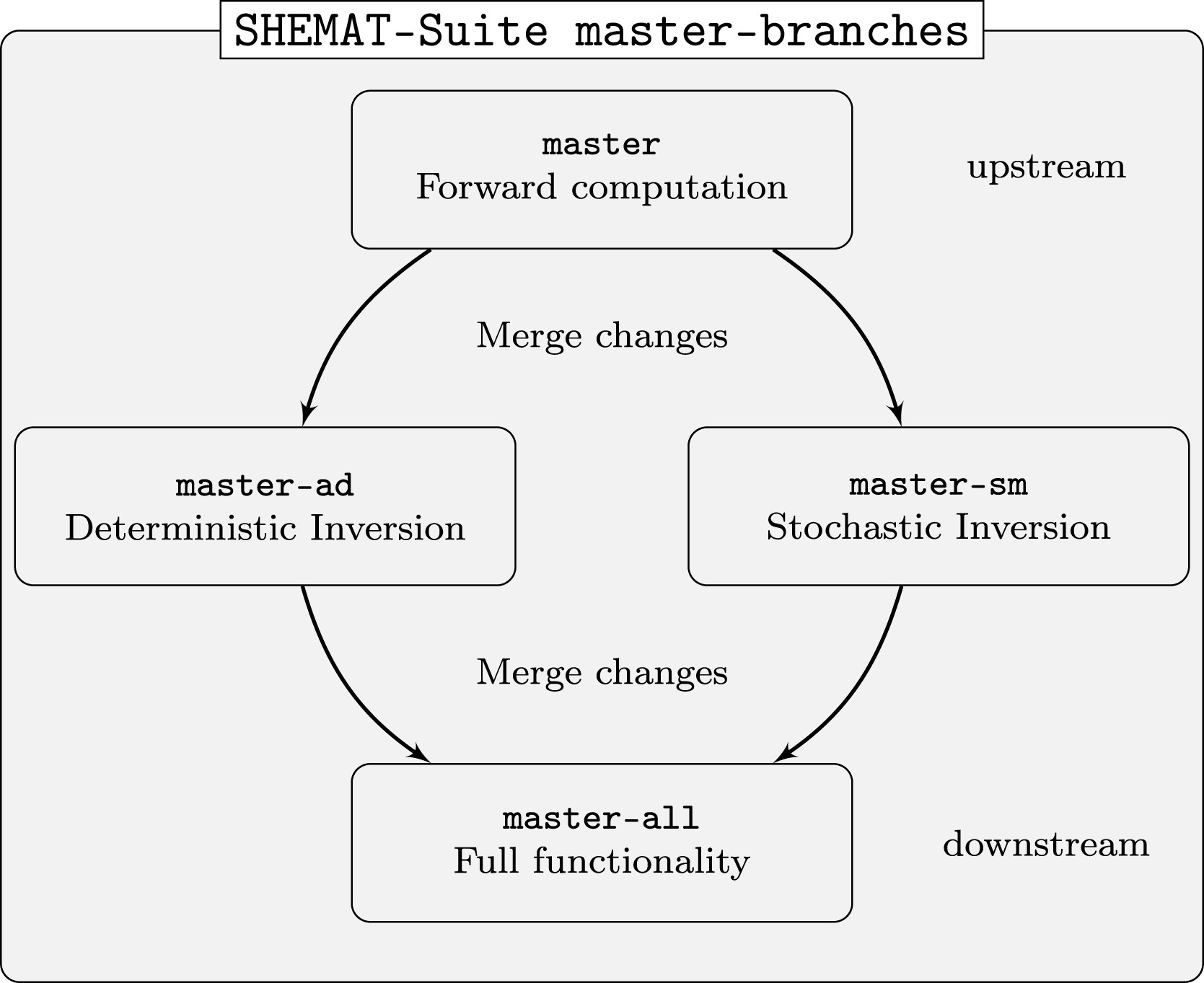
(4) parameter estimation and data assimilation by stochastic approaches (Monte Carlo, Ensemble Kalman filter) and by deterministic Bayesian approaches based on automatic differentiation for calculating exact (truncation error-free) derivatives of the forward code.


Journal:
SoftwareX 12 (2020) 100533

DOI:
https://doi.org/10.1016/j.softx.2020.100533

Authors:
Johannes Keller, Volker Rath, Johanna Bruckmann, Darius Mottaghy, Christoph Clauser, Andreas Wolf, Ralf Seidler, H. Martin Bücker, Norbert Klitzsch.

EoCoE is a European Horizon 2020 funded project of Centre of Excellence in computing applications. It is designed to enhance numerical simulation efficiency in the international context of the High Performance Computing (HPC) challenges. It focusses its application scope towards low carbon energy domains.


To measure solar energy's profound impact, we must contemplate the “carbon footprint” — a metric that quantifies the total greenhouse gas emissions caused by an individual, organization, event, or product. Traditional electricity production contributes heavily to a nation's footprint, with fossil fuels being the predominant energy source. By harnessing solar energy, we offset these emissions and aid in the progressive decline of our collective carbon footprint.

Switching to solar is more than energy change it's a commitment to a future with reduced carbon emissions
- Roberto Liam

Our Role in Solar Advancement

To measure solar energy's profound impact, we must contemplate the “carbon footprint” — a metric that quantifies the total greenhouse gas emissions caused by an individual, organization, event, or product. Traditional electricity production contributes heavily to a nation's footprint, with fossil fuels being the predominant energy source. By harnessing solar energy, we offset these emissions and aid in the progressive decline of our collective carbon footprint.

In the battle against climate change, the shift towards renewable energy sources plays a pivotal role. Among these, solar energy emerges as a beacon of hope and innovation. Positioned as both a clean and inexhaustible source of power, solar energy has shown significant promise in reducing global carbon emissions. Let’s explore how the adoption of solar power is making strides in the journey towards a more sustainable future.

Active participation from both consumers and industries in the solar movement is imperative. It includes transitioning to solar power where feasible, supporting policies that encourage